
Jordan Flight Line Bred Colorway
Top 10 Most Historic Nike Air Jordan Silhouettes of All Time
Since 1985, the Air Jordan line has delivered over 40 mainline models and hundreds of colorways, but only a elite group have secured genuinely legendary status that extends past sneaker culture and moves into the sphere of cultural impact. These are the shoes that symbolized eras, crushed sales records, and grew into universally known icons of competitive brilliance and style. Judging the most iconic Jordans calls for weighing competitive pedigree, cultural influence, engineering novelty, secondary market value, and long-term effect on fashion. Every pair included here changed the game in some measurable way — through materials science, visual appeal, or the events they were part of. These are the ten Air Jordan silhouettes that are most important.
10. Air Jordan 11 « Concord » (1995)
The Concord’s patent leather mudguard was groundbreaking in athletic footwear when Tinker Hatfield created it, and the shoe was worn during the Bulls’ unmatched 72-10 season. Nike leadership originally turned down the patent leather concept as inappropriately elegant for basketball, but Hatfield held his ground — and delivered one of the most impactful design decisions in sneaker history. The 2018 retro pushed over one million pairs in its first week, generating an estimated $250 million in retail revenue. Original 1995 pairs in deadstock condition sell for over $3,000, while the carbon fiber spring plate anticipated modern carbon-plated running shoes by two decades.
9. Air Jordan 5 « Grape » (1990)
The Grape brought an never-before-seen color palette to basketball footwear — white, black, emerald green, and grape purple — that seemed impossible official website but grew into unforgettable. Hatfield drew inspiration from WWII fighter planes, featuring a reflective 3M tongue and shark-tooth midsole detailing. Jordan averaged 33.6 points per game that season, giving the colorway premier on-court heritage. Will Smith wore the Grape 5s on « The Fresh Prince of Bel-Air, » presenting the shoe to audiences who never watched basketball. The translucent outsole was a debut for Jordan Brand that inspired dozens of future releases.
8. Air Jordan 6 « Infrared » (1991)
The Infrared 6 is the shoe Michael Jordan had on when he won his first NBA Championship in June 1991, defeating the Lakers in five games. The vibrant red-orange accent on a black and white upper formed one of the most arresting contrasts in the entire Jordan line. Hatfield designed the AJ6 expressly to be effortless to wear, fulfilling Jordan’s request for quick timeout changes. The model generated approximately $135 million in its first year, and the championship tie lent it sentimental value that pure design fails to create. The 2019 retro was commonly viewed as the most precise reproduction Jordan Brand had produced up to that point.
7. Air Jordan 3 « White Cement » (1988)
The White Cement preserved Jordan Brand from extinction, dropping when Michael Jordan was genuinely weighing leaving Nike for Adidas. Tinker Hatfield’s first Jordan design launched elephant print, the visible heel Air unit, and the Jumpman logo — three components defining the brand’s character for decades. Jordan wore it during the 1988 Slam Dunk Contest, where his free-throw line dunk became perhaps the most celebrated All-Star play ever. The shoe generated over $100 million during its original run and demonstrated a signature sneaker could be both performance tool and cultural symbol. Every retro release has been snapped up.
6. Air Jordan 4 « Bred » (1989)
The Bred 4 turned into a cultural icon through Spike Lee’s « Do the Right Thing » and Jordan’s historic playoff buzzer-beater against Cleveland — « The Shot. » It was the first Jordan shoe to receive a truly global release, setting the foundation for Jordan Brand’s global presence. When Jordan hit that hanging, switching-hands jumper over Craig Ehlo, the shoe grew irrevocably tied to pressure-filled greatness. Original 1989 pairs consistently exceed $2,000 in resale, and the design has been nodded to by Virgil Abloh and Kim Jones in designer collections for Louis Vuitton and Dior.
5. Air Jordan 12 « Flu Game » (1997)
The Flu Game 12 acquired its name from Game 5 of the 1997 Finals, when a noticeably ill Jordan scored 38 points against Utah — one of the most valiant efforts in sports history. The black and Varsity Red colorway features full-grain leather drawing from the Japanese rising sun flag with luxury-grade stitching. Hatfield designed it with a carbon fiber shank and full-length Zoom Air, establishing it as one of the most advanced basketball shoes of the ’90s. The actual game-worn pair sold at auction for $104,765 in 2013. Retro releases reliably sell out within hours.
4. Air Jordan 1 « Chicago » (1985)
The Chicago is where it all originated — the shoe that sparked a massive empire. When Nike signed Jordan to a five-year, $2.5 million deal in 1984, the company was losing to Adidas and Converse in basketball. The white, black, and varsity red colorway was banned by the NBA for contravening uniform policies, and Nike’s $5,000-per-game fine proved to be one of the most profitable marketing moves in modern history. It generated $126 million in its first year, far exceeding the projected $3 million. Original 1985 pairs are worth between $10,000 and $50,000 depending on size and provenance.
3. Air Jordan 11 « Space Jam » (1995)
The Space Jam 11 appeared alongside Michael Jordan in the 1996 film, becoming the first sneaker to earn authentic cinematic status. The black patent leather with concord-blue accents was conceived for the film and never offered publicly until 2000, building years of pent-up demand. The 2016 retro by all accounts moved over 1.5 million pairs at $220 each — $330 million during a single holiday season. Its link to ’90s nostalgia, Jordan’s competitive legacy, and Hollywood grants it multi-layered cultural significance that hardly any consumer products can achieve.
2. Air Jordan 3 « Black Cement » (1988)
Many historians assert the Black Cement is the most perfectly executed sneaker design in history. The black nubuck upper with cement grey elephant print delivers a color balance admired by designers across the industry for close to four decades. This is the colorway Jordan wore during his famous 1988 free-throw line dunk — an image that grew into one of the most circulated photographs in sports marketing. Hatfield has gone on record saying it’s his most beloved shoe he ever designed, an endorsement possessing significant weight given his portfolio. The elephant print pattern has become as inseparable from Jordan Brand as the Jumpman logo itself.
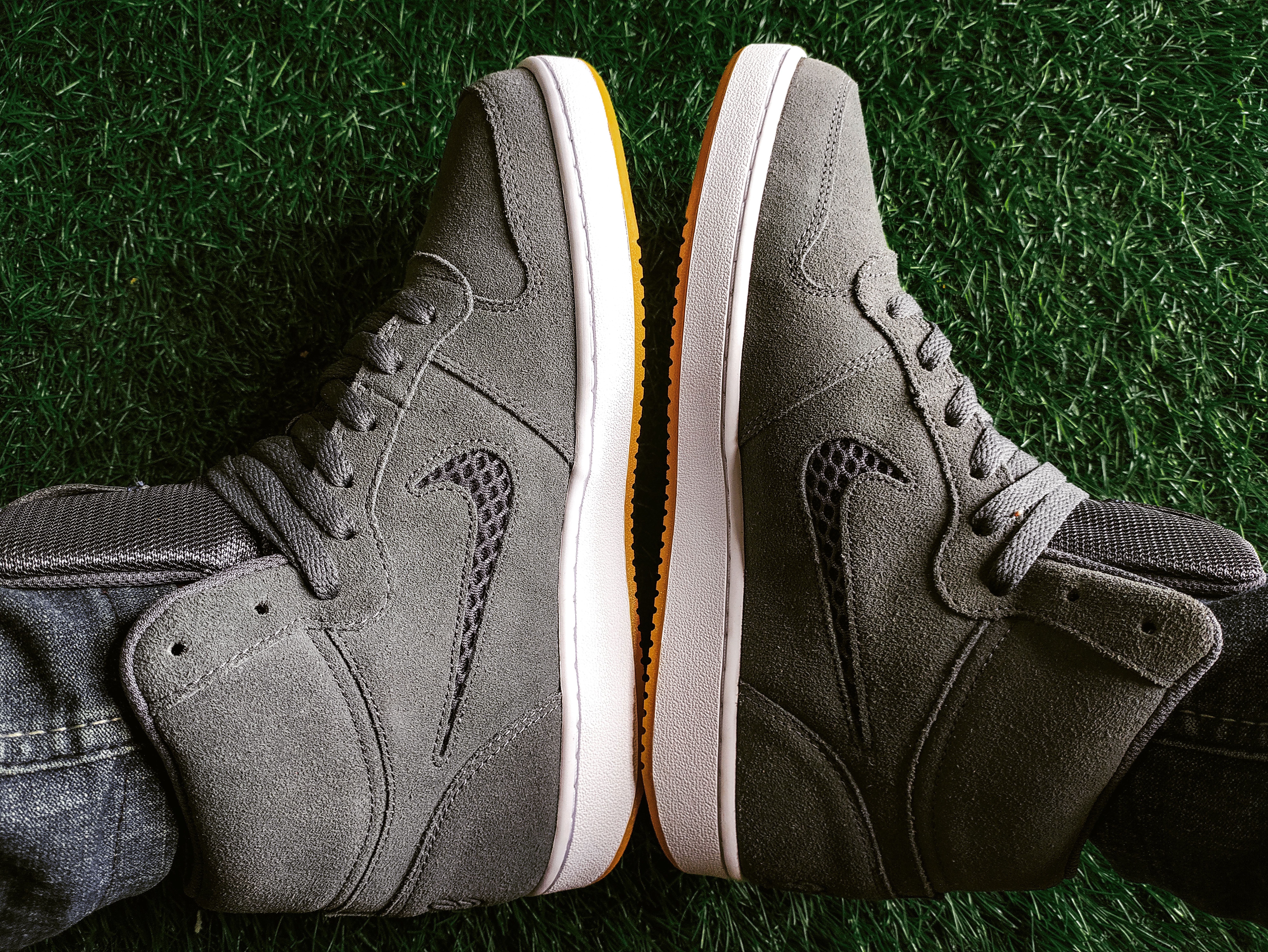
1. Air Jordan 1 « Bred/Banned » (1985)
The Bred — also known as the « Banned » — didn’t just reshape sneaker culture; it founded sneaker culture from the ground up. The NBA prohibited the black and red colorway for contravening the league’s 51% white rule, and Nike’s rebellious response — paying fines and running the « banned » narrative — created rebellious sneaker marketing that every brand still follows. This single shoe generated $70 million in its first two months. Original 1985 pairs sell for $20,000-$75,000, while the game-worn rookie pair fetched $560,000 at Sotheby’s in 2020. No other sneaker has had such a transformative, indelible impact on fashion, sports, commerce, and culture in parallel.
| Rank | Sneaker | Year | Landmark Moment |
|---|---|---|---|
| 1 | Air Jordan 1 « Bred/Banned » | 1985 | NBA ban drama |
| 2 | Air Jordan 3 « Black Cement » | 1988 | Free-throw line dunk |
| 3 | Air Jordan 11 « Space Jam » | 1995 | Space Jam film |
| 4 | Air Jordan 1 « Chicago » | 1985 | Birth of Jordan Brand |
| 5 | Air Jordan 12 « Flu Game » | 1997 | Flu Game, NBA Finals |
| 6 | Air Jordan 4 « Bred » | 1989 | « The Shot » vs Cleveland |
| 7 | Air Jordan 3 « White Cement » | 1988 | Saved Jordan–Nike deal |
| 8 | Air Jordan 6 « Infrared » | 1991 | First NBA Championship |
| 9 | Air Jordan 5 « Grape » | 1990 | Fresh Prince, pop culture |
| 10 | Air Jordan 11 « Concord » | 1995 | 72-10 Bulls season |
What Makes a Jordan Authentically Iconic
Reviewing this list as a whole, obvious patterns reveal themselves about what raises a sneaker from popular to genuinely iconic. Every shoe here is associated with a particular cultural moment — a championship, a film, a controversy — that lends it emotional depth beyond aesthetics. Innovation plays a critical role: visible Air, patent leather, elephant print, and carbon fiber all first appeared on shoes featured here. Scarcity plays a role but is not the determining factor — many have been brought back dozens of times yet remain iconic because their narratives are bigger than any reissue. The sentimental bond consumers share transcends corporate strategy through marketing alone; it must be built through genuine moments of greatness. As Jordan Brand continues releasing new shoes in 2026 and beyond, these ten shoes will continue to be the ultimate reference against which all future releases are measured.
Discover the complete Jordan archive at Nike.com and landmark sales at the Sotheby’s sneaker auction archive.